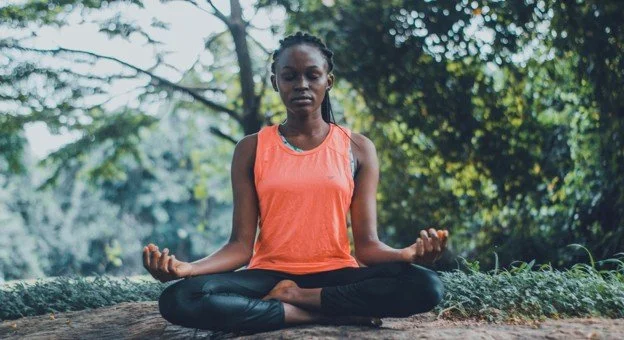
Image via Pexels
Future-Proofing Your Mind: Practical Resilience for an Unpredictable World
Australians are living through a decade where “normal” keeps shifting—weather extremes, job-market shakeups, rising costs, and news cycles that can feel like a firehose. When the outside world is wobbly, the inside world matters more: your mindset, your emotional flexibility, and the habits that keep you steady. The good news is that resilience isn’t a fixed trait; it’s a set of trainable skills you can build, lose, rebuild, and strengthen again.
A quick snapshot you can actually use
Resilience isn’t about being relentlessly positive or pretending nothing hurts. It’s the ability to meet change without collapsing—then adapting without losing yourself. If you can pair curiosity with self-compassion, keep learning, and lean on people you trust, you’re already doing the work.
Resilience tools at a glance
| What's happening | Common autopilot response | A more resilient pivot |
|---|---|---|
| Plans change suddently | "I hate uncertainty" | "What's still controllable here?" |
| A tough emotion shows up | Avoid / numb / snap | Name it, feel it, choose next |
| Too many decisions | Freeze or overthink | Shrink the problem |
| Confidence dips | "I can't handle this" | "I can learn my way through" |
| Social support feels distant | Withdraw | Reach out early |
Lifelong learning as a resilience muscle (and not just for “career people”)
Learning keeps the mind agile—especially when your role, workplace, or interests change. It also builds confidence through evidence: I can start as a beginner and get better. For some people, structured study is the most reliable way to keep momentum. Flexible programs—like an online healthcare degree—can fit around work and family while helping you keep skills current, explore new pathways, and stay adaptable when industries evolve. Continuing education supports mental resilience because it rewards curiosity, strengthens self-trust, and reinforces a growth mindset: change isn’t only something that happens to you; it’s something you can train for.
Openness to change, without the forced grin
Openness isn’t blind optimism. It’s the willingness to update your expectations when reality updates the rules. A resilient mind asks: What might be trying to change in me—skills, routines, priorities—because the environment changed? That question turns disruption into direction. A useful practice is to separate identity from strategy. Your values can stay stable while your methods evolve. You can still be “a reliable person” even if the way you work, parent, study, or manage money has to shift.
The 15-minute resilience reset
Two-minute check-in: Ask, “What’s the biggest pressure on me today?” Write one sentence.
Three-minute breath or a simple walk: Nothing fancy—slow exhale, or a lap around the block.
Five-minute clarity sprint: List what you can influence in the next 24 hours. Circle one item.
Three-minute connection: Message someone supportive, or schedule a coffee/walk.
Two-minute commitment: Choose one small action that matches your values (health, family, craft, community). Do it before the day ends.
It’s short on purpose. Resilience grows when the habit is realistic.
A resource worth keeping handy
If you want a reputable, Australia-focused place to build everyday mental wellbeing habits, Beyond Blue’s wellbeing hub is a solid bookmark. It’s written for regular people (not clinicians), and it covers practical ideas like connecting with others, using setbacks as learning experiences, and strengthening coping routines over time. It’s also useful when you’re not in crisis—because resilience is easier to build before you’re depleted. If you’re supporting a friend or family member, it can give you language and small steps that feel doable.
FAQ
How do I become more comfortable with uncertainty?
Start small and repeat often. Pick low-stakes uncertainties (trying a new route, experimenting with a new routine) and practice staying present while you do them. Your brain learns, “Uncertainty isn’t automatically danger.”
What if mindfulness makes me notice more anxiety?
That can happen at first—because you’re finally paying attention. Keep sessions short, anchor in the body (feet on the floor, longer exhale), and treat the anxiety as information, not an emergency.
Is resilience just “toughing it out”?
No. Toughing it out can be useful in short bursts, but resilience is broader: recovery, learning, asking for help, and adapting without losing your values.
How do I stay optimistic without ignoring real problems?
Use grounded optimism: hope plus planning. Name the risk, choose one practical action, and keep a backup plan so your hope isn’t fragile.
Conclusion
Future-proofing your mind isn’t about predicting the future—it’s about building flexibility for whatever arrives. Practice curiosity when fear flares, train attention with mindfulness, and treat learning as a lifelong stabiliser, not a one-off phase. Keep your relationships close, because resilience travels through people. And aim for grounded optimism: a hopeful stance with practical steps underneath.
Article courtesy of Lucille Rosetti from https://thebereaved.org/